Mara Braun Watch Continues -- Return from Redshirt Injury Season

WinMinGophers!

Active member
Joined
Jan 6, 2026
Messages
124
Reaction score
86
Points
28
Mara Braun watch continues. She's a shooting guard, combo guard, for Minnesota Gophers. A top prospect coming out of high school. Big Ten All-Freshman team for Minnesota Gophers. As of today entering the game at Washington Huskies:


2023-24 Season at Minnesota Gophers:

FG%: .384
3PT: .364


2024-25 Season

Injured -- Medical Redshirt
Recognized to the Ann Meyers-Drysdale Shooting Guard of the Year Award watch list… Posted a season-high 21 points against Vermont (Nov. 8)… Recorded a career- and team-high eight steals against the Catamounts, becoming the first Gopher to record eight steals in a game since 1994… Started Minnesota’s first five games, scoring in double digits in four… Was Minnesota’s leading scorer to start the season, averaging 13.6 points per game through the first five games. (Information this paragraph from Gophers website)


2025-26 Season (current)

FG%: .367
3PT: .276


2021-2022 Season at Wayzata High School -- 4 Star Recruit, #28 Overall Prospect

FG%: .436
3PT: .407
1768757089771.png


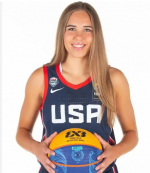
BRAUN WITH TEAM USA (2023) (below info from Gophers website)
Made her Team USA debut at the FIBA U21 3x3 Nations League in Handan, China, on June 28, 2023... Helped Team USA win the Asia-Pacific conference title, winning five of the six stops during the six days of competitions, earning a berth into the 2023 FIBA U23 Nations League Final in Mongolia in September of 2023... In 13 games Braun played in Handan, the United States finished 12-1...

With Team USA in Handan Braun scored 66 points in 13 games, highlighted by a 17-point performance during the penultimate tournament which was the third-most by any individual during Stop 5...

Went on to win the U23 FIBA 3x3 Nations League Final in Ulaanbaatar, Mongolia, finishing with an undefeated record of 6-0... Was the co-leader in the championship game, scoring six of the team's 19 points in the 19-18 win over China... On top of being the first United States team, men or women, to win the Nations League Final Braun's squad also became the first women's U21 team to win the event.


Mara Braun's stats today. A big uptick:

FG%: .462 (6-13)
3PT: .500 (3-6)

Whack a mole --> solve one issue and something else deflates. Argh! The team in other areas regressed and lost on the road to Washington.

Would love to see Braun in the bright lights of the NCAA tournament at least once.

Sick and tired of the lousy refs too, especially against the men's team but Minnesota women's too. They'll make sure Minnesota never sees the Tournament.


Only since Coach P arrived.
Both Braun and Battle have gone backwards under Coach P.
And Heyer fled.
Amaya had one of her better season last year.. most post scored in any season.. best FG and 3pt % .. scored a career best 12.8 ppg.. she was a HUGE reason we went on our run in the WNIT.. she avg 19.5 pgg in the WINT


Only since Coach P arrived.
Both Braun and Battle have gone backwards under Coach P.
And Heyer fled.

She shot under 40% on 2s as a freshman.

Her highest efg% was as a sophomore (under the current regime)

I’ll ignore her 5 games last season cause those were about her standard efg% and 5 games a small sample size.

This year is lower than ever for her though. Really struggling from 3 is dragging it down.

So no—not just since coach p arrived
 

She shot under 40% on 2s as a freshman.

Her highest efg% was as a sophomore (under the current regime)

I’ll ignore her 5 games last season cause those were about her standard efg% and 5 games a small sample size.

This year is lower than ever for her though. Really struggling from 3 is dragging it down.

So no—not just since coach p arrived

Amen
 

Injuries complicate her story.

She made the Big Ten All-Freshmen team. Her field goal shooting that freshman season was from further out. She had some aversion to getting beat up going closer.

She's more of a distance sniper although she does get fouls.

This season Braun is working it better inside out of necessity since her 3 point shot went AWOL until the Washington game break out.
 

She made the Big Ten All-Freshmen team. Her field goal shooting that freshman season was from further out. She had some aversion to getting beat up going closer.
That could have been a coaching problem in year one.

I see her this year going to the rim, clearly trying to get fouls, and both not making the basket and getting no whistle. She knows one of her best strengths is 90% free throw shooting when she gets to the line often, but this year I've noticed she's just not able to draw as many fouls.


Only since Coach P arrived.
Both Braun and Battle have gone backwards under Coach P.
And Heyer fled.
Don't let facts get in the way. Heyer hardly plays for Oregon. She was losing playing time here.


Injuries complicate her story.

She made the Big Ten All-Freshmen team. Her field goal shooting that freshman season was from further out. She had some aversion to getting beat up going closer.

She's more of a distance sniper although she does get fouls.

This season Braun is working it better inside out of necessity since her 3 point shot went AWOL until the Washington game break out.
I agree that she is a long distance sniper. She likes to stand on the Sara Scalia honorary square and jack up threes. But, it is not working this year. It seems strange because I suspect that she shot tons of 3-point shots while rehabilitating. I can understand her being reluctant to attack the basket because she probably worries about re-injuring her foot.

I thought she had great potential as a freshman. When she played on the 3 X 3 national team, I thought she would come back a more complete player and attack the basket. Nope. She didn't seem comfortable with the physical contact under the basket. Then, the injuries set in. She has attacked the basket the last couple of games but I don't feel like it is regular thing, yet.

Many people say that she is a great defensive player. I think that she avoids contact. She often has 0 - 1 fouls in a game. I don't think that it is because she is extraordinary defensively because she doesn't get a huge amount of steals, rebounds, or blocks. Maybe, she causes her opponent to miss shots a lot? I would like to see her be a little more physical even though she might get 2 - 3 fouls.


Don't let facts get in the way. Heyer hardly plays for Oregon. She was losing playing time here.
Can't make it up... "Facts" Heyer hardly plays because she is sitting out by NCAA rule.
She is getting paid this year and next at Oregon,
"Losing playing time here" is a long ways from fact. That is a lousy take unfounded opinion. Heyer played enough to be one of the top 3 Gophers in minutes played per game last year. What? As a senior she might not see the floor.? Heyer was the Gopher's leading rebounder last year but the leading rebounders always lose playing time right? My opinion...Heyer was the hardest worker on the team night after night and those people don't lose minutes as seniors.
She didn't transfer because she was afraid she wouldn't play.
 

Many people say that she is a great defensive player. I think that she avoids contact. She often has 0 - 1 fouls in a game. I don't think that it is because she is extraordinary defensively because she doesn't get a huge amount of steals, rebounds, or blocks. Maybe, she causes her opponent to miss shots a lot? I would like to see her be a little more physical even though she might get 2 - 3 fouls.
She does lead the team in blocks this season, for what it's worth...
 

Can't make it up... "Facts" Heyer hardly plays because she is sitting out by NCAA rule.
She is getting paid this year and next at Oregon,
"Losing playing time here" is a long ways from fact. That is a lousy take unfounded opinion. Heyer played enough to be one of the top 3 Gophers in minutes played per game last year. What? As a senior she might not see the floor.? Heyer was the Gopher's leading rebounder last year but the leading rebounders always lose playing time right? My opinion...Heyer was the hardest worker on the team night after night and those people don't lose minutes as seniors.
She didn't transfer because she was afraid she wouldn't play.
Ok, my fact was incorrect. But the remainder stands as my opinion, no less possible than yours. But why do so many people blame the coach and not the players? They're paid well to produce, just like the coach. But they have to execute. And as there is talk about team speed, was Heyer going to help in that area?
 

Do the players bear some responsibility? Of course, but the last time I checked the coach is responsible for the following: the current makeup of the team, the schedule, the offensive and defensive schemes, and the recruitment of future players. Not exactly a 50-50 split.


I wondered why. It must be the two injuries to the foot with extended time out.


Google AI (is not always accurate)
Yes, several players have experienced significant, career-altering shooting and performance declines due to serious foot injuries, primarily because these injuries impact the fundamental mechanics of balance, lift, and explosiveness required for shooting.

While some foot fractures (like the Jones fracture) often see players return to baseline performance within three years, more severe or chronic issues have had a lasting negative impact.

Notable Examples of Decline After Foot Injuries
  • Bill Walton: Severe and chronic foot injuries, including fractures, derailed a career that was on a Hall of Fame trajectory. He was an incredibly accurate shooter for a center with a "picture-perfect" shot, but after injuries forced him into a part-time role, he never regained his prime form or efficiency. The ongoing issues dramatically reduced his playing time and overall performance capabilities.
  • Yao Ming: Yao's career was tragically cut short by a series of foot and leg fractures, including osteomyelitis in his big toe and a broken bone in his foot. While he maintained excellent shooting percentages when he was on the court, his injuries prevented him from sustaining a healthy, long-term career during his prime years, effectively ending his consistent, high-efficiency output and leading to early retirement.
  • Brandon Roy: Though largely a knee issue, the degeneration of his knees due to injuries impacted his lower body mechanics and explosiveness, which is crucial for shooting. He was never able to regain his All-Star shooting efficiency and overall performance before his premature retirement.
  • Udonis Haslem: Following a Lisfranc injury (a serious mid-foot ligament injury) and subsequent surgery, Haslem shot a career-low 42% from the field his first year back, down from his typical efficiency above 50%. While he bounced back the following season, the initial decline demonstrates the immediate impact of the injury.
Generally, research indicates that while many players can return to play after a foot fracture, there is often an initial decrease in performance and playing time. The long-term performance return is highly dependent on the severity and specific type of injury.

This also is particularly common with Achilles tears and chronic knee issues, which can rob players of explosiveness and force changes in their mechanics or shot selection.

Notable Examples of Shooting Declines Post-Injury to Achilles [not Mara Braun's injury, FYI]
  • Breanna Stewart: Following her right Achilles tendon rupture in 2019, the WNBA star experienced a significant dip in shooting efficiency upon her return in 2020. Her overall field goal accuracy fell from 52.9% (2018 MVP season) to 45.1% (a 14.8% drop), and her three-point shooting dropped from 41.5% to 36.8%.
  • Kobe Bryant: After tearing his Achilles tendon late in his career, Bryant struggled with efficiency. The injury flattened his fadeaway jump shot and he was never the same efficient scorer he was in his prime, though he maintained his high shot volume.
  • Rudy Gay: Following his Achilles injury, Gay had to fundamentally change his game, moving from a primary offensive option on the wing to a more supporting role closer to the basket to maintain efficiency, illustrating the lasting impact on a player's ability to create shots.

Kevin Durant's shooting percentages did not decline after his Achilles injury; in fact, his efficiency has been even better since his return. He has been an anomaly, returning to elite form immediately and maintaining a higher career shooting percentage post-injury than pre-injury.

Kevin Durant: Pre- vs Post-Achilles Shooting Splits

StatisticPre-Achilles Career AvgPost-Achilles Career Avg
Field Goal % (FG%)49%53%
Three-Point % (3P%)38%42%
Free Throw % (FT%)88%88%
Points Per Game (PPG)27.027.9

  • A Change in Shot Profile: While his overall shooting improved, he has taken a lower percentage of his shots at the rim post-injury, likely due to a slight loss of vertical athleticism. He compensates by being the "GOAT mid-range shooter," shooting an incredibly efficient 54% from mid-range since his return.
  • Sustained Success: Durant has been on pace to shoot over 50% from the field for his 14th straight season, a testament to his unique ability to maintain elite scoring efficiency well into his mid-30s after a catastrophic injury.


Examples of Players Returning to Form After Foot Injuries
  • Michael Jordan: Early in his second season (1985-86), Jordan suffered a broken foot (navicular bone fracture) that forced him to miss 65 games. He returned for the end of the season and the playoffs, and in the following years, went on to win seven consecutive scoring titles and multiple championships, showcasing a complete return to his superstar form.
  • Stephen Curry: Early in his career, Curry was plagued by recurring right ankle sprains that required two surgeries to stabilize the joint. Following these procedures and dedicated rehab, he overcame the chronic instability to become a two-time MVP and a four-time NBA champion, reaching a level of superstardom that seemed uncertain during his early injury struggles.
  • Kevin Durant: Before his Achilles tear, Durant had a serious foot injury (a broken fifth metatarsal) that required three surgeries during the 2014-15 season. He returned the following season in elite form and continued his trajectory as one of the best scorers in the league.
  • Dominique Wilkins: He is famous for a historic return from a torn Achilles tendon (which impacts foot/ankle mechanics significantly) in 1992. At an age when many players would decline, he returned and averaged 29.9 points per game the following season, maintaining his All-Star level of play.
  • Furkan Korkmaz: He sustained a Lisfranc fracture in the G League during his rookie season that did not require surgery. He returned to play with no further issues that season and later developed into a key contributor for the 76ers.


I would be totally surprised if she returned. She could test the market and go to a top 10 team and provide minutes.

She is not washed. I think she needs to be in a different offense that is better. Our offense is terrible.

She's 2nd in Minutes
3rd in scoring
4th in rebounding
3rd in assists
2nd in steals
1st in blocks
90% FT Shooter


4th in turnovers
Bad in % shooting
27% in 3PT Shooting
 

I wondered why. It must be the two injuries to the foot with extended time out.


Google AI (is not always accurate)
Yes, several players have experienced significant, career-altering shooting and performance declines due to serious foot injuries, primarily because these injuries impact the fundamental mechanics of balance, lift, and explosiveness required for shooting.

While some foot fractures (like the Jones fracture) often see players return to baseline performance within three years, more severe or chronic issues have had a lasting negative impact.

Notable Examples of Decline After Foot Injuries
  • Bill Walton: Severe and chronic foot injuries, including fractures, derailed a career that was on a Hall of Fame trajectory. He was an incredibly accurate shooter for a center with a "picture-perfect" shot, but after injuries forced him into a part-time role, he never regained his prime form or efficiency. The ongoing issues dramatically reduced his playing time and overall performance capabilities.
  • Yao Ming: Yao's career was tragically cut short by a series of foot and leg fractures, including osteomyelitis in his big toe and a broken bone in his foot. While he maintained excellent shooting percentages when he was on the court, his injuries prevented him from sustaining a healthy, long-term career during his prime years, effectively ending his consistent, high-efficiency output and leading to early retirement.
  • Brandon Roy: Though largely a knee issue, the degeneration of his knees due to injuries impacted his lower body mechanics and explosiveness, which is crucial for shooting. He was never able to regain his All-Star shooting efficiency and overall performance before his premature retirement.
  • Udonis Haslem: Following a Lisfranc injury (a serious mid-foot ligament injury) and subsequent surgery, Haslem shot a career-low 42% from the field his first year back, down from his typical efficiency above 50%. While he bounced back the following season, the initial decline demonstrates the immediate impact of the injury.
Generally, research indicates that while many players can return to play after a foot fracture, there is often an initial decrease in performance and playing time. The long-term performance return is highly dependent on the severity and specific type of injury.

This also is particularly common with Achilles tears and chronic knee issues, which can rob players of explosiveness and force changes in their mechanics or shot selection.

Notable Examples of Shooting Declines Post-Injury to Achilles [not Mara Braun's injury, FYI]
  • Breanna Stewart: Following her right Achilles tendon rupture in 2019, the WNBA star experienced a significant dip in shooting efficiency upon her return in 2020. Her overall field goal accuracy fell from 52.9% (2018 MVP season) to 45.1% (a 14.8% drop), and her three-point shooting dropped from 41.5% to 36.8%.
  • Kobe Bryant: After tearing his Achilles tendon late in his career, Bryant struggled with efficiency. The injury flattened his fadeaway jump shot and he was never the same efficient scorer he was in his prime, though he maintained his high shot volume.
  • Rudy Gay: Following his Achilles injury, Gay had to fundamentally change his game, moving from a primary offensive option on the wing to a more supporting role closer to the basket to maintain efficiency, illustrating the lasting impact on a player's ability to create shots.

Kevin Durant's shooting percentages did not decline after his Achilles injury; in fact, his efficiency has been even better since his return. He has been an anomaly, returning to elite form immediately and maintaining a higher career shooting percentage post-injury than pre-injury.

Kevin Durant: Pre- vs Post-Achilles Shooting Splits

StatisticPre-Achilles Career AvgPost-Achilles Career Avg
Field Goal % (FG%)49%53%
Three-Point % (3P%)38%42%
Free Throw % (FT%)88%88%
Points Per Game (PPG)27.027.9

  • A Change in Shot Profile: While his overall shooting improved, he has taken a lower percentage of his shots at the rim post-injury, likely due to a slight loss of vertical athleticism. He compensates by being the "GOAT mid-range shooter," shooting an incredibly efficient 54% from mid-range since his return.
  • Sustained Success: Durant has been on pace to shoot over 50% from the field for his 14th straight season, a testament to his unique ability to maintain elite scoring efficiency well into his mid-30s after a catastrophic injury.


Examples of Players Returning to Form After Foot Injuries
  • Michael Jordan: Early in his second season (1985-86), Jordan suffered a broken foot (navicular bone fracture) that forced him to miss 65 games. He returned for the end of the season and the playoffs, and in the following years, went on to win seven consecutive scoring titles and multiple championships, showcasing a complete return to his superstar form.
  • Stephen Curry: Early in his career, Curry was plagued by recurring right ankle sprains that required two surgeries to stabilize the joint. Following these procedures and dedicated rehab, he overcame the chronic instability to become a two-time MVP and a four-time NBA champion, reaching a level of superstardom that seemed uncertain during his early injury struggles.
  • Kevin Durant: Before his Achilles tear, Durant had a serious foot injury (a broken fifth metatarsal) that required three surgeries during the 2014-15 season. He returned the following season in elite form and continued his trajectory as one of the best scorers in the league.
  • Dominique Wilkins: He is famous for a historic return from a torn Achilles tendon (which impacts foot/ankle mechanics significantly) in 1992. At an age when many players would decline, he returned and averaged 29.9 points per game the following season, maintaining his All-Star level of play.
  • Furkan Korkmaz: He sustained a Lisfranc fracture in the G League during his rookie season that did not require surgery. He returned to play with no further issues that season and later developed into a key contributor for the 76ers.

You put a lot of time and effort into this. Thanks.
 

I think the football injury's have messed with Brauns shot and consistency. Seem to notice not setting feet or getting squared up to shoot or landing. If you look at previous seasons shooting form, and this year there is a noticeable difference in footwork and shooting form. Not sure with what is the cause.
 

Braun’s shooting percentages were never high and have not really dropped…
The narrative from the recent Strib article and various posts that Braun needs to regain or rediscover her pre-injury form ignores the reality of her pre-injury shooting, and the relative consistency of her shooting woes throughout her career. Each year of her career there are roughly 50 double figures scorers in BIG play, and each year of her career Mara is at or very near the bottom of that group in shooting percentages.

Against BIG competition her freshman year, Mara was promising from 3 (36.8%) and a total disaster from 2 (33.6%). Collectively she shot 35%. For context, that year 49 players averaged 10 or more points a game against BIG competition, and Mara was 49th in that group in FG%. She was 41st in that group in effective field-goal percentage (EFG%).

Against BIG competition in 9 games her sophomore year, Mara was decent but worse from 3 (32.8%) and still a total disaster from 2 (30.7%). Collectively she shot 31.7%. That year 51 players averaged 10 or more points a game against BIG competition, and Mara was 51st in that group in FG%, 50th in EFG%.

This year in BIG play, Mara is worse from 3 (25.5%) and improved but still poor from 2 (38.6%). Collectively she is shooting 31.9%. This year 54 players are currently averaging 10 or more points a game against BIG competition, and Mara is 51st in that group in FG%, 52nd in EFG%.
 

There are multiple variables. The foot injuries are the obvious variable.Another is that this offense.philosophy is different. Comments from another discussion thread:

I see alot of criticism of players shooting %s and rightfully so but no talk about the offensive system. Dawn hates turnovers so she runs a system to limit them. Its either throw the ball down low to Hart or Tonga or one of the guards iso's theres little ball movement, player movement, or screens set. Pretty much every player shoots better off a pass but this system generates most of its looks off the dribble. This works well when you have the best 2 players in the conference like she did at USD but wont work well when you dont have top tier talent and she will never have that in the big ten.

...One of the philosophies behind this system is to allow players creatively as a team and individuals to find shots and be versatile at that. Potentially that's superior.

Rachel Banham was terrific off the dribble. Some players love that.

That offense flavor is certainly influencing what you see on the court. Dribble, dribble, dribble...


Heyer is literally not eligible this season for Oregon. She doesn't hardly play, she just flat out can't play.
Not sure, but I think she may be eligible second semester since she didn’t play for the Gophers this season. Oregon has been listing Heyer as Out on the game availability report, which wouldn’t make sense if she is not eligible. Can’t be Out if you’re not eligible.


Top Bottom