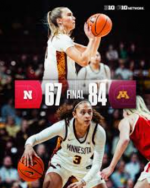
Expanding on the previous post about the Gophers system under
Coach Dawn Plitzuweit -- AKA I'm rambling. Some may pick up some things, others irritated.
Google AI
NCAA WOMEN'S BASKETBALL OFFENSE SYSTEMS
In the modern game, there isn’t one "better" system, but the elite teams are increasingly moving away from rigid patterns toward fluid, "positionless" basketball. Here is a breakdown of the systems you’ll see most often on your screen.
1. The Motion Offense (The "Thinking" System)
Motion is less a set of plays and more a set of
rules. Instead of a coach calling a play, players make decisions based on what their defender does.
- The Rules: "If you pass, you must screen or cut." "If your defender overplays you, backdoor cut to the rim."
- Why it’s popular: It’s incredibly hard to scout. You can't "stop" a play if there isn't one. It also develops high "Basketball IQ" in players.
- Variations:
- 5-Out Motion: (Used by teams like Oklahoma). All five players stand behind the three-point line. This empties the lane, making it easy to drive or cut for layups.
- 4-Out, 1-In: The most common NCAA look. Four players on the perimeter and one dominant "big" inside (like South Carolina often utilizes) to provide a safety valve and rebounding.
2. Dribble Drive Motion (The "Attack" System)
If you see a team constantly driving to the hoop, collapsing the defense, and kicking it out for a three, you’re watching the Dribble Drive.
- The Goal: Put the defense in a constant state of "help." If the defender stays home, the guard scores a layup. If the defender helps, the guard passes to the open shooter.
- Key Team: Texas (under Vic Schaefer) has used variations of this to create a high-pressure, aggressive offensive identity.
3. The Princeton Offense (The "Backdoor" System)
Originally a men's system, it’s now a staple in women's hoops (notably
UCLA and many mid-majors).
- The Look: High post-action. You’ll see a center standing at the free-throw line passing to guards who are constantly cutting behind their defenders.
- The "Tell": If you see a lot of "chin" screens (a back-screen for a player cutting to the rim) and sudden backdoor passes, it’s a Princeton-style set.
4. Continuity & Set Offenses (The "Pattern" Systems)
- Flex Offense: A repeating pattern of screens and cuts. It’s "old school" but effective for teams that lack one superstar but have five disciplined players who can all pass and shoot.
- Horns: You’ll recognize this by the "V" shape at the start—two players at the elbows (corners of the free-throw line) and two in the corners. It’s the most common way to start a "quick hitter" play to get a specific player a shot.
Which is "Better"?
There is no "best," only the
best fit for the roster.
- Motion is better if you have versatile, high-IQ players who can all pass and shoot (think the Iowa teams with Caitlin Clark—they used motion to let her "read" the floor and improvise).
- Set Plays are better if you have a massive talent advantage at one position. If you have a 6'7" center who can't be stopped, you don't want "motion"—you want a set play that puts the ball in her hands every time.
Fan Tip: The "Two-Second Rule"
To see the system in action, watch a player who
just passed the ball. * In a
poor system, she will stand still and watch.
- In a great motion system, she will immediately sprint to set a screen or cut to the hoop within two seconds. This "off-ball" movement is what separates the top-tier programs like UConn or Stanford from the rest.
To become a better fan of NCAA women’s basketball, it helps to stop looking for "plays" and start looking for
spacing and
reads.
NCAA WOMEN'S BASKETBALL DEFENSE
If you want to watch the game like a coach, you have to stop following the ball. While the offense is about
spacing, the defense is about
denial and geometry.
In the women’s game, defensive identity is often more consistent than offensive identity. Here are the three main "walls" you’ll see teams build to stop a bucket.
1. The Pack Line Defense
This is arguably the most popular defense in college basketball right now (made famous by Tony Bennett at Virginia, but used extensively by teams like
NC State or
South Carolina).
- How to spot it: Imagine an invisible arc about 16 feet from the hoop (inside the three-point line). Only the person guarding the ball is allowed outside that "pack line." The other four defenders stay inside it, sagging off their players.
- The Goal: To "clog the paint." It makes the court feel tiny. It dares the offense to beat them with long-range jump shots while making it impossible to drive to the rim.
- The "Tell": If you see a ball-handler drive and suddenly find herself surrounded by three people in the paint, that’s the Pack Line working perfectly.
2. The Match-Up Zone
This is the "trickiest" defense to play against and to watch.
Syracuse and
Louisville are famous for variations of this.
- How to spot it: It looks like a 2-3 zone (two guards up top, three players across the bottom), but as soon as an offensive player moves, the defenders "pass" them off or follow them like man-to-man.
- The Goal: Confusion. It takes away the easy passes of a standard zone but prevents the one-on-one "blow-bys" of man-to-man.
- The "Tell": Watch the defenders’ hands. In a match-up zone, they are constantly pointing and talking, "switching" who they are guarding every few seconds as the offense moves.
3. The "Press" (Full-Court Pressure)
Teams like
LSU or
Texas often use defensive pressure to create offensive points.
- The Diamond Press (1-2-1-1): One player guards the ball, two are at mid-court, and one is back deep. They want to "trap" the ball-handler in the corners or at the half-court line.
- The Goal: To speed the game up. If a team has a deep bench and the opponent has a weak point guard, they will "press" to force turnovers and tire the opponent out by the 4th quarter.
- The "Tell": If the defense is guarding the baseline before the ball is even in-bounded, you're in for a high-intensity "track meet" game.
The Minnesota Gophers currently have one of the most elite defenses in the country.
Under head coach Dawn Plitzuweit, the Gophers have undergone a massive identity shift. As of early 2026, they are ranked near the top of the Big Ten and the entire NCAA in several defensive categories.
Here is how their "Wall of Minnesota" fits into the systems we discussed:
1. The "Plitzuweit Philosophy": High-Intensity Man-to-Man
While some teams rely on zones to hide weaknesses, Minnesota plays a
highly disciplined Man-to-Man system. *
The Goal: Total disruption without fouling. They don't just "guard" their player; they "influence" them.
- How it fits: It’s a hybrid of the Pack Line and Aggressive Denial. They stay "packed" enough to protect the paint (led by Sophie Hart inside), but they are incredibly mobile on the perimeter, forcing opponents into long, difficult possessions.
2. The Stats: Why they are "Better"
If you’re looking for proof that their system works, look at the numbers from this 2025–26 season:
- Points Allowed: They are allowing only about 55–56 points per game, which is the best in the Big Ten and Top 20 nationally.
- The "50-Point Club": They have held 11 different opponents to 50 points or less this season. In modern basketball, that is an incredible feat of discipline.
- Turnover Margin: They don't just stop people from scoring; they value the ball themselves. They currently lead the nation in fewest turnovers committed, meaning their defense doesn't have to constantly bail out offensive mistakes.
3. What to watch for as a Fan
When you tune into a Gophers game, look for these three things to see their system at work:
- "Ball Screen Navigation": Watch how Amaya Battle or Mara Braun handle a screen. Instead of getting "stuck," the Gophers are coached to stay connected to their player, forcing the offense to reset their play over and over.
- Multiple Efforts: Plitzuweit preaches "toughness." You’ll see a Gopher defender close out on a shooter, then immediately sprint to the paint to box out. It’s a "never-quit" style of defense.
- The "Shot Clock Pressure": Because they are so disciplined, you’ll notice opponents often forced to take "panic shots" with 2 or 3 seconds left on the shot clock. That is the ultimate win for Minnesota’s system.
The Verdict
The Gophers aren't necessarily "better" because they have a secret play—they are better because they are
more disciplined. In a high-scoring league like the Big Ten, Minnesota has decided to be the team that makes everyone else uncomfortable.
WHAT ELSE TO WATCH FOR DURING GOPHERS GAMES
Watching the Gophers in 2026 is like watching a masterclass in
efficiency and toughness. Under Coach Dawn Plitzuweit, they have become one of the most disciplined "process-driven" teams in the country.
As of February 2026, they are sitting on a 19-6 record (10-4 in the Big Ten) and are a Top 10 NET team. Here is exactly what you should watch for to appreciate their "system."
1. On Defense: The "Wall of Minnesota"
You already know they have an elite defense (ranking #10 nationally in Points Allowed), but watch for these specific mechanics:
- The "Gap" Discipline: Even though they play man-to-man, they rarely leave their teammates on an island. Watch how the defenders "shrink" the floor. When an opponent drives, Gopher defenders "stunt" (fake toward the ball) and recover so quickly that the driver feels like they are running into a wall of five people.
- Sophie Hart’s Verticality: As the anchor in the middle (6'5"), watch how she contests shots without fouling. She rarely reaches; she just stays tall. This allows the perimeter guards like Amaya Battle to be more aggressive because they know Hart is behind them.
- The "50-Point Club" Mentality: Plitzuweit preaches "Toughness, Togetherness, and Find a Way." Watch for how they celebrate shot-clock violations. For this team, forcing an opponent into a 30-second struggle is as good as a three-pointer.
2. On Offense: Positionless Motion
The Gophers have transitioned into a true
Read-and-React Motion Offense.
- The Three-Headed Monster: Watch the chemistry between Mara Braun, Grace Grocholski, and Amaya Battle.
- Mara Braun is the "pure" scorer. Watch how she uses screens to get just an inch of space—her release is one of the fastest in the Big Ten.
- Grace Grocholski is the "stretch" threat. Watch how she drifts to the corners to pull the defense away from the hoop.
- Amaya Battle is the engine. She leads the team in rebounds and assists—watch her "probe" the paint, waiting for the defense to collapse before finding the open shooter.
- Early Offense (The "Attack Mode"): While they are disciplined, they don't want to play slow. Watch for them to push the ball immediately after a miss. They want to score "4-on-3" or "3-on-2" before the defense can set up that "Pack Line" we discussed.
3. The "Secret" Stat: Turnover Margin
If you want to sound like an expert fan, don't just look at the score; look at the
turnover column.
- Minnesota is currently #2 in the nation in fewest turnovers committed (averaging only about 10 per game).
- Why this matters: By not turning the ball over, they ensure their elite defense is always set. They never give the opponent "easy" points. Watching a Gophers game is watching a team that refuses to beat itself.
What to Look for Next Game:
Next time you watch, focus on
Tori McKinney (the "X-Factor" sophomore). She has emerged as a high-scoring guard (13+ PPG) who bridges the gap between the veteran stars. If she’s playing well, the Gophers are almost impossible to beat because the defense can’t double-team Braun or Grocholski.