Minnesota vs. Michigan State
Sunday, February 22, 2026, at 5:00 PM CST at Williams Arena ("The Barn").
Live stats at this link: https://gophersports.com/sidearmstats/wbball/summary
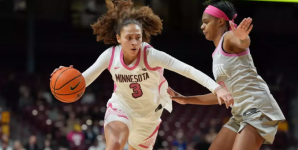
Minnesota's offense under Coach Dawn Plitzuweit is a positionless, motion-based system that prioritizes ball security and tempo control to neutralize high-pressure teams like Ohio State.
Core Offensive Principles of Minnesota Gophers
- "Read and React" Motion: The half-court offense relies on a fluid system where players make decisions based on off-ball screening and strict "read" rules rather than fixed plays.
- Elite Ball Security: Minnesota leads the nation in turnovers per game. This discipline is a primary weapon.
- Transition from Defense: The system is "defense-first," meaning the Gophers use defensive stops to fuel quick transition buckets, often "pitching ahead" to guards for open three-pointers before the defense can set.
- Versatile Scoring: The offense features a balanced attack with multiple threats; they often have five players in double figures.
- Inside-Out Pressure: They establish an interior presence through players like Sophie Hart to force defenses to collapse, creating open looks for shooters like Grace Grocholski (high 3-point shooting percentage) and Mara Braun.
Michigan State's current 2025-26 roster is led by a mix of veteran scoring threats and versatile defensive playmakers. The team's balanced offensive system features several players averaging double figures, making them difficult to scout.
Key Defensive Matchup: Ball Security vs. Ball Pressure
| Category | Minnesota (The Shield) | Michigan State (The Spear) |
| Turnovers Per Game | 10.1 (1st in NCAA) | 13.0 |
| Steals Per Game | 8.7 | 11.7 |
| Assist/TO Ratio | 1.6 | 1.4 |
| Points Allowed/G | 55.9 (1st in B1G) | 68.4 (estimated) |
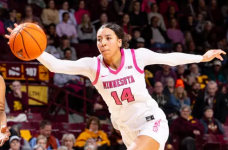 Michigan State Key Players & Current Stats (2025-26 Season)
| Player | Position | PPG | RPG | Key Attribute |
| Grace VanSlooten | Forward | 15.2 | 6.6 | Leading scorer and primary post presence; leads team in blocks (1.0). |
| Kennedy Blair | Guard | 14.0 | 7.2 | Versatile "stat-stuffer" leading the team in rebounds and assists (5.4). |
| Rashunda Jones | Guard | 12.2 | 3.5 | Aggressive perimeter defender leading the team in steals (2.3). |
| Jalyn Brown | Guard | 10.9 | 2.6 | Efficient scorer with high field goal percentage (.531). |
| Theryn Hallock | Guard | 10.6 | 1.6 | High-intensity "spark plug" known for clutch scoring and second-half heroics. |
To beat Minnesota,
the Spartans will try to force the Gophers out of their structured "defense-first" half-court shell by pushing the ball relentlessly in
transition and using a "five-out" offensive look to pull Minnesota’s rim protectors away from the paint. Coach Robyn Fralick will likely deploy a heavy
full-court press to disrupt the Gophers' ball handlers, hoping to turn defensive steals into quick fast-break points and turn the game into a high-scoring track meet that favors their versatile scoring roster.
Michigan State aims to win by weaponizing their superior
pace and depth to overwhelm opponents before their defense can set.
Minnesota's backcourt is uniquely equipped to handle Michigan State’s transition-heavy pressure, as the
Gophers currently rank #1 in the nation in fewest turnovers per game, averaging just
10.1 giveaways. This disciplined play creates a fascinating "strength-on-strength" matchup against a Michigan State defense that thrives on chaos, averaging
11.7 steals per game (ranking among the best in the Big Ten).
To survive the "Spartan Pressure," Minnesota will rely on
Amaya Battle and
Mara Braun. Battle serves as the primary floor general with a steady handle, while Michigan State's
Rashunda Jones (2.4 steals per game) will likely be the primary "pest" assigned to disrupt her rhythm. If Michigan State cannot force at least 15+ turnovers, they may struggle to find the "easy baskets" they need to win.

Minnesota's guards maintain a high level of composure, boasting a
1.60 assist-to-turnover ratio, which is the fourth-best mark in the conference. This suggests that while Michigan State will try to speed them up, the Gophers have the tactical discipline to stay in their half-court motion offense.
What to Look For (Strategic Matchup)
- Pace vs. Precision: Watch how Michigan State tries to speed up the game. Minnesota's coach, Dawn Plitzuweit, prefers a more controlled pace to set her "defense-first" half-court system.
- The "Anchor" vs. Speed: Look for Minnesota center Sophie Hart (6'5") to anchor the paint. Michigan State will likely try to pull her away from the basket with mobile forwards like Grace VanSlooten.
- Turnover Battle: Minnesota thrives on forcing turnovers (scoring 41 points off them in their opener). Michigan State prides itself on taking care of the ball.
Keys to Winning
- For Minnesota:
- Control the Glass: Prevent Michigan State from getting second-chance points; the Spartans are elite at offensive rebounding.
- Smother the Perimeter: Contest 3-point shots without fouling, as MSU is highly efficient at the free-throw line.
- For Michigan State:
- Transition Scoring: Beat Minnesota's defense down the floor before they can set their half-court "motion" defense.
- Bench Depth: Utilize their 10-deep rotation to wear down Minnesota’s shorter rotation.
Michigan State Supporting Specialists
- Emma Shumate: The team's primary outside threat, leading the Spartans with 56 made 3-pointers and averaging 2.2 per game.
- Isaline Alexander: A high-efficiency finisher inside, shooting 66.3% from the field since returning to the lineup.
Note on Injuries: Inés Sotelo has dealt with a foot injury this season, and guard
Rashunda Jones recently missed time, allowing
Sara Sambolić (13 points in the last game) to step into a starting role.
Why Michigan State Might Let It Slip Away
For the Spartans, losses typically stem from
prolonged scoring droughts combined with
mental lapses in ball security.
- The "10-Minute Lapses": Michigan State has a history this season of "unraveling" for a single quarter, particularly the second, where they have allowed opponents to go on massive runs (e.g., being outscored 26–9 by Michigan).
- Turnover Avalanches: While they are a high-tempo team, they sometimes cross the line into "discombobulated" play. In their worst losses, they have turned the ball over 20+ times, allowing opponents to score 30+ points off those mistakes.
- Settling for Bad Shots: When their transition game is slowed, they occasionally settle for inefficient outside shots. They recorded a season-worst 31% from the field in one loss due to poor shot selection.
Why Minnesota Might Let It Slip Away
For the Gophers, defeat usually comes down to
late-game fatigue and
foul trouble.
- Short Rotation Fatigue: Minnesota often relies on a tight 7-player rotation. In the second half, this can lead to "flat" play where they lose their defensive edge and miss late-game free throws that would otherwise seal a win.
- Third Quarter Slumps: The Gophers have struggled with "brutal" third quarters, specifically on the road, where defensive lapses allow teams to pull away by double digits.
- Free Throw Vulnerability: In tight games against top-tier Big Ten opponents, Minnesota has "blown" high-win-probability leads by failing to execute in the final two minutes, including missing critical free throws or allowing 10–0 opponent runs in the closing seconds.
"Losing Formula"
| Team | Loss Trigger |
| Michigan State | Turnover Avalanches: If they have a 10-minute "mental lapse" and turn the ball over 5+ times in a row, the game is over. |
| Minnesota | Late-Game Fatigue: If their starters hit the "wall" in the 4th quarter or get into foul trouble, their defense could collapse. |
High-stakes "seed-climbing" battle for both programs as they enter the final stretch of the regular season.

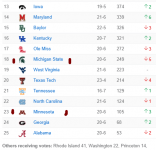
Minnesota was the most disrespected team in NCAA basketball. Then they defeated #10 Ohio State on Pink Jersey Night. AP voters need to look harder.
 NCAA Tournament Bracketology & Seeding
- Hosting Rights at Stake: The most critical prize for this game is a top-16 national seed, which allows a team to host the first two rounds of the NCAA Tournament.
- Michigan State (Projected #3–5 Seed): Currently ranked #18 in the AP Poll, the Spartans are projected as a #3 or #4 seed. A win keeps them in line to host; a loss could drop them to the "road" side of the bracket as a #5 seed.
- Minnesota (Projected #5–7 Seed): Following an eight-game win streak and an upset of #10 Ohio State, the Gophers have risen from a #9 seed projection to a #5 or #6 seed. Beating Michigan State could "wrestle away" a hosting spot, potentially elevating them to a #4 seed.
Big Ten Tournament Seeding
The Big Ten Tournament features a tiered bracket where the top four teams receive a
double-bye, advancing directly to the quarterfinals.
- The Double-Bye Race: Michigan State (10–4 B1G) and Minnesota (12–4 B1G) are currently locked in a battle for these top spots.
- Minnesota's Path: If the Gophers win out, they are a lock for a top-four seed and the double-bye. A win over MSU would also give them a tiebreaker advantage over one of their primary competitors for the #3 or #4 seed.
What a Win Means for Minnesota (
AP Top 25)
- Projected Ranking: Minnesota recently debuted in the AP Top 25 at #23. After already upsetting #10 Ohio State earlier this week, a second top-25 win against #18 Michigan State would likely catapult the Gophers into the Top 15–18 range in the next poll.
- Program Milestone: Winning this game would likely secure Minnesota's highest AP ranking since 2005 and establish them as a legitimate "second-weekend" threat in March.
- NET Impact: Minnesota currently sits at #8 or #9 in the NET rankings. Beating another top-20 NET team like MSU would solidify their standing as a top-10 team analytically, further pressure-testing the AP voters to move them



 And thank you Gophers seniors!