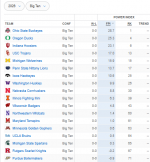
Is it a bit hard for Minn fans to stomach ESPN's initial College Football Power Index (FPI) Ranking of 63?

99Gopher

Well-known member
Joined
Jul 26, 2021
Messages
606
Reaction score
779
Points
93
College Football Power Index (FPI) Ranking - B1G
1783727630655.png


What's probably hardest to stomach is that they have NEB 33 spots higher and Wisky 20 spots higher than Minn, but based on what metrics are you making that assessment, as it sure isn't on the field as of late. When you're ranked that low in the rating model, it does make it harder to dig out of a hole that deep, even with some good wins. Is there any validity to these models before a season even starts?


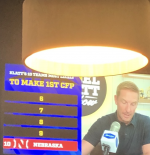
Always makes me excited to see Nebraska crash and burn whenever these come out. Happened last year, too. I snapped this last year at a sports bar.
insta.png

They probably had similar hype going into 2022 before dropping their first game in Dublin to Northwestern.
 

Neb always gets pre season freebies, Heisman watch lists.

MN pretty often get knocked back a ways.

Doesn’t matter.


I think preseason the FPI is just the Vegas odds adjusted for bullshit on how espn ranks your coaching staff, roster talent, and historical recruiting rankings. Mid-season the bayesian math adjusts for on field results but is still biased by previously mentioned factors.
 

Mn in that spot makes perfect sense if you look at how the sausage is made

Per ESPN:

In the preseason, these components are made up entirely of data from previous seasons, such as returning starters, past performance, recruiting rankings and coaching tenure (more on the preseason component below). That information allows FPI to make predictions (and make determinations on the strength of a team’s opponents) beginning in Week 1, and then it declines in weight as the season progresses. It is important to note that prior seasons’ information never completely disappears, because it has been proved to help with prediction accuracy even at the end of a season.

Preseason ratings historically have their flaws, but ultimately they allow for an opponent adjustment after Week 1 and are a great tool to preview the season. As noted, there are four components to the preseason rating: prior performance, returning starters, recruiting rankings and coaching tenure.

-- Prior performance is built off the framework of expected points added. The most recent year’s performance is by far the most important piece of information powering preseason FPI, but three more years are added to measure consistency and account for outliers in performance. The most recent year counts almost twice as much as the three years before it.

-- Returning starters on offense and defense, with special consideration given to starting quarterbacks or transfer quarterbacks with starting experience, is the second piece of information powering preseason FPI. Because starters interact with other inputs, it’s not as simple as saying an extra returning starter is worth one point. Nonetheless, a starting quarterback is worth about 3.3 points per game to a team returning an average offense (all else equal), and a transfer quarterback is given half the weight of a starter.

-- FPI uses four recruiting services -- ESPN, Rivals, Scouts and Phil Steele -- to measure the talent on a team’s roster and add an additional piece of information about which teams are on the rise. The addition of recruiting has been a controversial piece of FPI, but it’s worth noting that it is a very minor component that helps with prediction accuracy.

-- Coaching tenure is primarily a way to capture the addition of a new head coach. With all else equal, a team’s predictive offensive, defensive and special teams ratings will regress slightly to the mean with the addition of a new coach.


Mn in that spot makes perfect sense if you look at how the sausage is made

Per ESPN:

In the preseason, these components are made up entirely of data from previous seasons, such as returning starters, past performance, recruiting rankings and coaching tenure (more on the preseason component below). That information allows FPI to make predictions (and make determinations on the strength of a team’s opponents) beginning in Week 1, and then it declines in weight as the season progresses. It is important to note that prior seasons’ information never completely disappears, because it has been proved to help with prediction accuracy even at the end of a season.

Preseason ratings historically have their flaws, but ultimately they allow for an opponent adjustment after Week 1 and are a great tool to preview the season. As noted, there are four components to the preseason rating: prior performance, returning starters, recruiting rankings and coaching tenure.

-- Prior performance is built off the framework of expected points added. The most recent year’s performance is by far the most important piece of information powering preseason FPI, but three more years are added to measure consistency and account for outliers in performance. The most recent year counts almost twice as much as the three years before it.

-- Returning starters on offense and defense, with special consideration given to starting quarterbacks or transfer quarterbacks with starting experience, is the second piece of information powering preseason FPI. Because starters interact with other inputs, it’s not as simple as saying an extra returning starter is worth one point. Nonetheless, a starting quarterback is worth about 3.3 points per game to a team returning an average offense (all else equal), and a transfer quarterback is given half the weight of a starter.

-- FPI uses four recruiting services -- ESPN, Rivals, Scouts and Phil Steele -- to measure the talent on a team’s roster and add an additional piece of information about which teams are on the rise. The addition of recruiting has been a controversial piece of FPI, but it’s worth noting that it is a very minor component that helps with prediction accuracy.

-- Coaching tenure is primarily a way to capture the addition of a new head coach. With all else equal, a team’s predictive offensive, defensive and special teams ratings will regress slightly to the mean with the addition of a new coach.
Scout doesn't even exist anymore rivals is barely hanging on and no mention of 24/7


I'm irate.

Well, maybe not. I guess I'm disappointed.

Actually, I don't have the energy to be disappointed. Maybe I'll just wait and see how things play out and not care too much that the Gophers may be underrated by people that don't care about the Gophers.
 

💩4🧠s. Has the Gophers coming in 6th in the old Big West, ahead of only Purdue (barely). Gophers have to prove it every year. 🤷🏼‍♂️
 

Scout doesn't even exist anymore rivals is barely hanging on and no mention of 24/7
Just pulling from their site. I’m sure it’s now including 247 and on3.


Regardless, it’s as close to worthless as can be. Wisconsin was rated ahead of us in FPI last year at 4-8 as was Rutgers at 5-7 and Nebraska.

Mind you they all lost to Minnesota but hey great metric espn.


FPI is a rating created to put “Statistical” rating to justify early season losses not impacting certain teams.

Even at the end of the year last year: 4-8 Wisconsin rated higher than 8-5 Minnesota after losing and basically being impotent


The problem is espn FPI baked in SOS to their ratings but bases their SOS on their own ratings. The model is built with self fulfilling prophecy.

Recruiting rankings set baseline data.
Recruiting rankings are not accurate at all.

Self perpetuating bullshit


As with all efficiency based metrics, it also likes teams that lose close often better than teams that win close often but get blown out a couple of times.
I know people don’t like RPI but at least it’s a reflection of the only stat that actually matters


FPI and all ESPN proprietary systems have always been garbage

But they needed their own system so they look like a leader an innovator

It’s like being mad at my dog that he doesn’t pick up his own shit when we go for walks


I will neither praise nor condemn ESPN's rankings (I don't see any reason to praise them and I don't care enough to condemn them) but, as explained above, the most important factor in their preseason rankings is the team's performance in the previous season. Thinking about last season I think the unavoidable conclusion is ------

THE GOPHERS WEREN"T VERY GOOD!

I'll turn to metrics from the old school (but still useful in my opinion) Sagarin ratings. Here are the basic end-of-season rankings of the more relevant teams to the Gophers' 2025 experience:

Sag. Rank
Wisconsin
49​
Gophers
53​
Nebraska
54​
Northwestern
56​
Rutgers
62​
Michigan State
63​
California
76​
New Mexico
81​
Purdue
96​


How can Wisconsin be the highest ranked while having a 4-8 record? Simple, their Strength of Schedule was ranked #1 by Sagarin AND they beat two teams that had pretty high rankings (Washington #16 and Illinois #27).

Minnesota, on the other hand, had a #59 Strength of Schedule and didn't beat any team that was actually "good" when measured against overall FBS competition. They did manage to clobber Nebraska but they beat Rutgers at home by 3, Michigan State at home by 3 in overtime, Purdue at home by 7, and New Mexico at a neutral site by 3 in overtime. They lost by 3 to Northwestern and by two scores to California on the road. Of course, they did play three highly ranked teams on the road but were demolished in each of those three games. They did have a solid, albeit low scoring, win against Wisconsin at home in the snow.

Having said that, Minnesota deserves some credit for winning 8 games with a pretty mediocre team.

Our defense was fair last season but our offense was pretty weak overall. If we can improve both, but especially the offense, this season we could look much better even if our overall win total isn't much higher.
 
Last edited:

Agree with those who have debunked the FPI.

So ignoring the FPI ranking itself .... eventually Nebraska being ranked high preseason is going to be right.

Rhule had a steep upward trajectory at Temple and Baylor. Not as steep at Neb, but it has still been upward:
5-7 (3-6) No Bowl
6-6 (3-6) Won low-level bowl (Pinstripe)
7-5 (4-5) Lost mid-level bowl (Las Vegas)

Now we see what they'll do this year. 8-4 (5-4) would be another solid step forward, and reaching that 8-win regular season plateau that seems to even consistently evade PJ Fleck now in the NIL era (last 3 years).
 

I will neither praise nor condemn ESPN's rankings (I don't see any reason to praise them and I don't care enough to condemn them) but, as explained above, the most important factor in their preseason rankings is the team's performance in the previous season. Thinking about last season I think the unavoidable conclusion is ------

THE GOPHERS WEREN"T VERY GOOD!

I'll turn to metrics from the old school (but still useful in my opinion) Sagarin ratings. Here are the basic end-of-season rankings of the more relevant teams to the Gophers' 2025 experience:

Sag. Rank
Wisconsin
49​
Gophers
53​
Nebraska
54​
Northwestern
56​
Rutgers
62​
Michigan State
63​
California
76​
New Mexico
81​
Purdue
96​


How can Wisconsin be the highest ranked while having a 4-8 record? Simple, their Strength of Schedule was ranked #1 by Sagarin AND they beat two teams that had pretty high rankings (Washington #16 and Illinois #27).

Minnesota, on the other hand, had a #59 Strength of Schedule and didn't beat any team that was actually "good" when measured against overall FBS competition. They did manage to clobber Nebraska but they beat Rutgers at home by 3, Michigan State at home by 3 in overtime, Purdue at home by 7, and New Mexico at a neutral site by 3 in overtime. They lost by 3 to Northwestern and by two scores to California on the road. Of course, they did play three highly ranked teams on the road but were demolished in each of those three games. They did have a solid, albeit low scoring, win against Wisconsin at home in the snow.

Having said that, Minnesota deserves some credit for winning 8 games with pretty mediocre team.

Our defense was fair last season but our offense was pretty weak overall. If we can improve both, but especially the offense, this season we could look much better even if our overall win total isn't much higher.
Arkansas was 42nd in FPI and went 2-10. Florida was 37th at 4-8 (both Sagarin and FPI). There are some teams they do a bad job of ranking because of the SOS inflating them.


Arkansas was 42nd in FPI and went 2-10. Florida was 37th at 4-8 (both Sagarin and FPI). There are some teams they do a bad job of ranking because of the SOS inflating them.

I don't disagree with that but there is no perfect ranking system and I think it's hard to make a good case that the Gophers deserved to be ranked much higher in 2025 than where Sagarin ranked them.

I don't care about ESPN's FPI preseason ranking and I'm not sure why anyone would care very much.


Top Bottom