Four B1G Ones Coming -- Tournament Seeds -- Gophers Defense and Offense System Too

WinMinGophers!

Active member
Joined
Jan 6, 2026
Messages
278
Reaction score
239
Points
43
1770960381486.png

Gophers are the hottest team right now. They are riding a seven game winning streak in the Big Ten, a tough conference.

Minnesota Gophers (10-4 conference record) are probably a 5-8 seed in the NCAA Tournament. They have a long shot to secure a 4 seed and host the first two rounds of the tournament.

Gophers command a #10 overall NET ranking, the most critical stat. 10 should put them at a 4 seed except the ranking is not fully believable. For context, super power teams UConn, UCLA, and South Carolina are 1-3. Is Minnesota really 10?

The rest of the games will tell all.

  • Minnesota (19–6, 10–4 B1G): The Gophers are the "most disrespected" team in the Big Ten, boasting a defense that ranks 10th nationally in points allowed. They recently proved their ceiling by upsetting #10 Iowa on the road.
  • Home Court: Minnesota has won over 84% of their home games this season.
  • Streak Factor: Minnesota enters this stretch with the longest active win streak in the conference among these three teams (7 games).

Upcoming Games

Feb 15: At Wisconsin (5-9 conference record). Minnesota with a 70% chance of winning. Wisconsin is sporadically good, a potential spoiler. On the road border battle is always tough. Minnesota trounced Wisconsin earlier this season at home.

Feb 18: Host #8 Ohio State (11-2). Minnesota with a 37% chance of winning. Minnesota top-10 defense faces Ohio State's top-15 offense. Ohio State's Jaloni Cambridge is averaging 22.5 points per game. She scored 41 points earlier this year.

Feb 22: Host #13 Michigan State (9-5). Minnesota with a 40% chance of winning. Michigan State is balanced.

Mar 1: At Illinois (7-7). A high scoring team. 30th in AP 25 voting. Road games are tough. Minnesota with a 55% chance of winning.

Scenarios
Minnesota needs to beat either Ohio State or Michigan State to make the #10 NET ranking believable. Go 1-1 and Minnesota can claim to be about even with them.

Minnesota's elite defense and strong home record (11–2) make them a formidable upset threat.

Respectable losses to both Ohio State and Michigan State won't hurt the Gophers but won't get to the #4-5 seed.

Minnesota may be looking at a #6 seed.

MASSIVE *EXTREME RISK*
This Sunday, Wisconsin has the chance to kill the Gophers resume. A loss to a bad team like Wisconsin would be a disaster.

Illinois is mini-resume killer threat. The hottest team right now -- Minnesota -- has to beat Illinois to be THE hot team.


Then comes the Big Ten Tournament. That is for a later post.
 
Last edited:

Win out and make the semis in B1G tournament should lock a 3-4 seed.
 

So nice to be talking 'seed' instead of 'bubble' this year. It will take a longer run to get a 4 seed and NCAA tourney host slot, but it's nonetheless fun to talk about. Gophers now playing very good basketball.
 

I'm curious where what source you're using for the percent chance of winning? The only 3 predictive metrics I'm familiar with - NET, Torvik, CBB Reference's SRS - all put the Gophs with or above MSU and OSU, and favored at home. Don't imagine the Gophs will be the ~7 point favorites that Torvik predicts but I certainly don't think they'll be a dog either
 

I'm curious where what source you're using for the percent chance of winning? The only 3 predictive metrics I'm familiar with - NET, Torvik, CBB Reference's SRS - all put the Gophs with or above MSU and OSU, and favored at home. Don't imagine the Gophs will be the ~7 point favorites that Torvik predicts but I certainly don't think they'll be a dog either

That! I really appreciate your response. You know more about that than I do. This is great dialogue, really.

Gophers are not in the AP 25 (they are at 26 votes, the most disrespected team in basketball). They play #8 Ohio State with a player averaging 22.5 points and just put up 41. No way Gophers would be favored.

It's kind of crazy because the stats tell another story. Your point is valid. But are Gophers really at #10 NET????

What I wrote came from me knowing Gophers Women's Basketball somewhat well and ongoing discussions at Gopher Hole about this. WinMnGophers! is all-in on what I wrote. This:

The most disrespected team, the hottest team, the underdog team, snubbed by AP 25...

FOUR B1G ONES COMING!


1770990200407.png

More information.

Gophers lost to three teams towards the bottom of the AP 25. Gophers are playing more complete basketball since then, especially offense.

Gophers lost in double OT to a high-ranked-at-the-time Maryland team.

Gophers were without their best defender Tori McKinney and lost to Washington on the road. They would beat Washington now with McKinney.

Gophers lost to Alabama.

So what does that say about the Gophers? No way Minnesota could be favored over the high-powered Ohio State. I'll stand by my odds.

Gophers were leading high ranked Michigan (now #7) at half. Then the offense swooned. The offense was having problems back then. The offense is now better.

Gophers are a stout defense team. That is one trademark of Coach Dawn Plitzuweit. She has a certain system, her style. It's all connected. The video study, the defense strategy, the offense strategy. It's over my level of understanding to explain it. Here is what I can say.

Gophers are fantastic at defense.

The offense was struggling. Her offense views came under fire. Gophers were not doing a good job on screens, not sure if they moved away from stuff that wasn't working. Her offense was described and lots of dribbling and little ball movement, few screens, less off the pass shooting. It's not based around many preplanned plays. I don't know what was going on, this is over my level.

The offense has finally kicked in. The engine is now purring.

Go read the other thread at Gopher Hole about the Mara Braun Watch Continues. She had suffered two foot injuries in a row. She was struggling earlier. Was she washed up? She's now further back -- but not yet 100%. Although her total game is more complete than ever.

Bottom line: Coach Plitzuweit is an elite defense coach with an offense style that wasn't working for whatever reason and now it's all clicking.

Below is from AI, don't trust all that is in this:

Coach Dawn Plitzuweit has implemented a "defense-first" total system at Minnesota that has made the Gophers one of the most disciplined teams in the nation for 2026. Her philosophy is rooted in a process-driven approach where defensive stops and ball security directly fuel a versatile, modern offense.

1. The Defensive System: "Discipline and Disruptiveness"

Plitzuweit’s defensive identity is primarily a high-intensity man-to-man system that she adapts based on opponent personnel and actions.
  • Controlling the Controllable: Her system is based on the belief that while shots may not always fall, defensive effort and understanding can be consistent every night.
  • Defensive Pillars: The system is built on three core pillars: Toughness, Togetherness, and "Find a Way".
  • Technical Precision: Known as a "film junkie," Plitzuweit emphasizes "defensive disruptiveness"—using precise technical habits to force opponents into uncomfortable shots or mistakes without fouling.
  • 2026 Impact: This disciplined approach has led Minnesota to rank #1 in the Big Ten in scoring defense (55.9 PPG) and #1 in the nation in fewest turnovers per game (10.1), ensuring opponents rarely get easy transition points.

2. The Offensive Connection: Positionless & Motion-Based

Plitzuweit’s offense is designed to be a direct byproduct of her defensive success. She utilizes a system that leans heavily into positionless basketball and motion principles.
  • Defense-to-Offense Fuel: The intensity the Gophers bring on the defensive end is intended to "fuel their transition offense". By forcing stops and securing rebounds, the team can push the pace before the opponent's defense is set.
  • Positionless Philosophy: Plitzuweit recruits and develops players to be versatile. She wants as many players as possible to be "comfortable handling the basketball" so they can all "push it" in transition. This eliminates the need for a traditional point guard to initiate every set, allowing for a faster, more unpredictable attack.
  • Motion Offense: The half-court system is an "ideal world" motion offense that emphasizes floor spacing, attacking the rim, and high-volume three-point shooting. It is designed to "take what the defense gives," requiring all five players on the floor to be threats to pass, drive, or shoot.

3. Key Statistical Profile (February 2026)

This total system has propelled the Gophers to a Top 10 NET ranking.

System ComponentStatisticNational/Conference Rank
Defensive Discipline13.7 Fouls Per Game#1 in Big Ten
Defensive Disruptiveness56.1 Points Allowed#1 in Big Ten / #19 NCAA
Ball Security10.1 Turnovers Per Game#1 in NCAA
Offensive Connection1.61 Assist-to-Turnover#4 in NCAA
Under Plitzuweit, the Minnesota Gophers have become a "player-led program" where defensive toughness and offensive versatility are inseparable, allowing them to compete with the elite teams of the Big Ten.


More about the offense that was struggling but doing better now.

You are absolutely right that it looks like fluid motion, but that fluidity is the result of a highly structured system called a "Read and React" Motion Offense.

Since you want to look past the Pick and Roll, the "secret sauce" of Coach Dawn Plitzuweit’s offense is actually off-ball screening and strict decision-making rules.

Here is how the offense works without relying on the ball screen:

1. The "Fluidity" is Actually a Loop (Continuity)​

What you perceive as fluid motion is likely a "Continuity" offense.

  • How it works: In a freelance offense, players just find open space. In Plitzuweit’s system, if Option A is stopped, the players immediately flow into Option B, and then Option C, without stopping to reset.
  • The Visual: This creates that "endless motion" look. The ball moves from side to side, and bodies are constantly cutting, but they are following a specific map (e.g., "Pass and Cut away," or "Pass and Screen away").

2. The Real Engine: Off-Ball Screening​

If you take your eyes off the ball handler (Amaya Battle) and watch the other four players, you will see the real structure.

  • Screening for Shooters: With elite shooters like Mara Braun and Grace Grocholski, the offense is designed to get them open before they catch the ball. You will often see "Stagger Screens" (two players setting a screen side-by-side) or "Pin-Downs" (screening down toward the baseline) to free them up for a catch-and-shoot.
  • Screen-the-Screener: A common "play" within the motion is where Player A sets a screen for Player B, and then immediately receives a screen from Player C. This causes confusion for the defense and makes the movement look chaotic (fluid) to them, but it’s actually highly scripted.

3. The "4-Out, 1-In" Structure​

Unlike some modern "5-Out" offenses (where everyone stands at the three-point line), the Gophers utilize Sophie Hart as a true post presence inside.

  • The Pivot Point: Hart often acts as a hub. The guards feed her the ball in the high post (near the free-throw line) or low block.
  • Cutting: Once the ball goes inside to Hart, the "fluidity" kicks into high gear. The perimeter players immediately cut toward the basket (Laker cuts) or drift to the corner. This prevents the defense from helping off the shooters.

4. Pace as Proof of Structure​

The biggest evidence that this is a planned offense rather than "free-flowing" pickup style is their Pace and Turnover Rate.

  • The Gophers play deliberately slow. They are comfortable using 25+ seconds of the shot clock to grind the defense down.
  • They consistently rank among the nation's best in turnover margin. A loose, undefined offense usually results in high turnovers; Plitzuweit’s low-turnover numbers prove that every player knows exactly where they are supposed to be.

Summary​

It isn't that they are running a different "play" every time down the court. Instead, they are running one flexible system that has endless counters.

Next time you watch: Ignore the ball handler completely for two possessions. Watch Grace Grocholski run the baseline. You will likely see her run through a "gauntlet" of screens set by her teammates to pop out on the other side. That is the "preplanned" part of the motion.


More about the elite defense

Plitzuweit primarily employs a high-intensity man-to-man defensive system. While she adjusts the tactical specifics (like ball-screen coverage) based on the opponent and her current roster's strengths, the fundamentals remain constant:

  • Protecting the Paint: The defense is designed to be "gap-oriented," meaning players often sag slightly off non-shooters to clog driving lanes and support their post players.
  • Controlling the Boards: A hallmark of her system is limiting second-chance opportunities. In the 2025-26 season, the Gophers have consistently out-rebounded opponents, often holding them to single-digit offensive rebounds.
  • Ball Screen Discipline: Plitzuweit emphasizes technical precision in how her guards and bigs communicate through screens, aiming to stay attached to shooters while preventing easy rolls to the rim.

Key Statistical Success (2025-26 Season)​

The results of this system have been stark, especially in the current 2026 campaign. The Gophers have climbed to the top of the conference in several defensive metrics:

MetricRank/StatImpact
Scoring Defense55.9 PPGRanked 1st in the Big Ten and 18th nationally.
Field Goal Defense~34.6% (vs. WI)Forcing teams into low-percentage, contested shots.
Turnover Margin+4.5Ranked 1st in the Big Ten; utilizes pressure to create transition offense.
Ball Security10.1 TOPGLeads the nation in fewest turnovers, which prevents "fast-break" defense situations.

Personnel and Application​

Plitzuweit’s defense relies on versatile players who can switch or recover quickly.

  • Sophie Hart acts as the "anchor" in the middle, providing a dominant shot-altering presence.
  • Tori McKinney and Mara Braun provide length at the guard positions, which Plitzuweit uses to disrupt passing lanes and contest perimeter shots without fouling.
  • Physicality: Players are expected to "battle each possession." This grit was a primary reason for the team’s 2025 WBIT Championship and their current hunt for a high NCAA Tournament seed in 2026.
"We have to be sure we’re good on the defensive end, and then we build in the offense after that." — Dawn Plitzuweit


This video provides a deep dive into Coach Plitzuweit's "On The Court" philosophy, highlighting how she builds a player-led culture centered on defensive accountability and toughness.


Go read the other thread at Gopher Hole about the Mara Braun Watch Continues.
 
Last edited:

I just significantly updated my previous response with more info in case there's confusion.
 

Great description of the offense and how it supposed to run. When it breaks down (the 3rd quarter), what do you see as the main reason for the break down? My number one reason: too much dribbling.
 

Great description of the offense and how it supposed to run. When it breaks down (the 3rd quarter), what do you see as the main reason for the break down? My number one reason: too much dribbling.

One thing, shooting percentages crashed during games earlier this season. Gophers were beating Michigan and then crash.

That also was one reason for the 3rd quarter slump against Nebraska. Sophie Hart is having a great season. But then misses two in a row at the rim without excessive defense.pressure.

College ball.is like that. All basketball is like that. It is a mysterious thing how percentages change and change back.

Mara Braun said in the Nebraska post game that it wasn't them in the 3rd quarter swoon. It was AI. Humor. It is a myteriois thing.

Mara Braun is not what she was although better than earlier this season when her shooting looked washed up. Her trajectory has been upward. Not good when your shooting guard sniper has middling shooting percentages to start a season.

Amaya Battle went from lighting it up to miss and miss and then back to lighting it up. Her hot shooting was one reason the Gophers wom the WBIT tournament last season. But then a missed layup comes along.

I don"t know the why, what defenses were doing.

Beyond that I do not know basketball enough to say more. What I.pasted came from Google AI plus some of my own knowledge.

Up next, somebody else chime in who.has insights.


Big Ten Tournament

The 2026 Allstate Big Ten Women’s Basketball Tournament will be held from March 4–8, 2026, at Gainbridge Fieldhouse in Indianapolis, Indiana. The tournament will feature 15 teams, with the championship game taking place on Sunday, March 8, 2026, and airing on CBS.

Tournament Schedule & Details:
  • Dates: March 4–8, 2026
    • Location: Gainbridge Fieldhouse, Indianapolis, IN
    • Format: First-round games begin March 4, with top teams receiving byes to the quarterfinals on March 6.
    • Championship: Sunday, March 8, 2026
The 2026 Big Ten women's basketball tournament seeds the top 15 teams based on their final regular-season conference winning percentage. The top four teams earn a double-bye to the quarterfinals, while seeds 5–9 receive a first-round bye. Tiebreakers include head-to-head records and performance against higher-ranked teams.

Key Seeding and Bye Structure (15-Team Format)
  • Double-Bye (Quarterfinals): Seeds #1, #2, #3, and #4.
  • Single-Bye (Second Round): Seeds #5, #6, #7, #8, and #9.
  • First Round: Seeds #10 through #15 play in the first round.
Tiebreaker Procedures
If teams are tied in the final conference standings, the following, in order, are used to determine seeds:
  1. Head-to-Head Record: Results between the tied teams.
  2. Record vs. Highest Ranked Team: Winning percentage against the highest-seeded team, continuing down through the bracket until the tie is broken.
  3. Overall Winning Percentage: Combined results against all conference opponents.
  4. NET Ranking: Highest-ranked team in the NCAA Evaluation Tool (NET).
Tournament Progression
  • First Round: #12 vs. #13, #11 vs. #14, #10 vs. #15 (usually).
  • Second Round: #5-#9 enter, playing winners of the first round.
  • Quarterfinals: #1-#4 enter to play winners of the second round.

NCAA Tournament

The first round of the 2026 NCAA Division I Women's Basketball Tournament is scheduled for Friday, March 20, and Saturday, March 21, 2026.

The tournament begins shortly after Selection Sunday on March 15, where the 68-team bracket will be revealed at 8 p.m. ET on ESPN. Below is the full schedule for the 2026 tournament:

2026 NCAA Women's Tournament Schedule
  • Selection Sunday: March 15
  • First Four: March 18–19
  • First Round: March 20–21
  • Second Round: March 22–23
  • Sweet 16: March 27–28
  • Elite Eight: March 29–30
  • Final Four: April 3
  • Championship Game: April 5
 

Big Ten Tournament Seeds Based on Current Standings

Based on the standings as of
February 13, 2026, a reasonable projection for the Minnesota Golden Gophers in the 2026 Big Ten Tournament is the No. 5 seed.

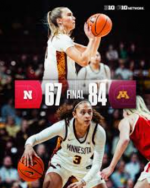
Following their recent win over Nebraska on February 12, 2026, Minnesota is currently on a 7-game winning streak and holds a 10–4 conference record.

While they are tied with Michigan State in the loss column, they currently trail the top four teams—UCLA, Michigan, Ohio State, and Iowa—who are positioned for the critical "double-bye" into the quarterfinals.

Projections based on conference standings through February 12, 2026.

Seed TeamConf. RecordCurrent Status
1UCLA13–0Undefeated in conference; clear favorite.
2Michigan11–2Holds tiebreaker over Ohio State.
3Ohio State11–2On a 4-game winning streak.
4Iowa9–3Currently in the final double-bye slot.
5Minnesota10–4Leading the 7-win streak; currently 5th in standings.
6Michigan State9–4Projected just behind Minnesota based on current tiebreakers.
7Washington8–5Firmly in the middle of the pack.
8Maryland7–6Recent wins over Nebraska and Penn State.
9USC7–6On a 5-game winning streak.
10Illinois6–7Recently defeated Wisconsin.

Minnesota’s Projection Analysis
  • Seeding Outlook: The Gophers are currently positioned as the No. 5 seed, which would give them a single bye into the second round. To move into the Top 4 and secure a double-bye, they likely need to leapfrog Iowa.
  • Key Upcoming Matchups: Minnesota's final push for a higher seed includes critical games against Ohio State (Feb 18) and Michigan State (Feb 22). Winning these could potentially move them into the Top 4.
  • Performance: Minnesota is playing its best basketball of the season, having risen from 8th to 5th in recent power rankings due to their 7-game streak, which includes a signature road win over No. 10 Iowa.
 

Shooting a basketball is like hitting a baseball. Both are always streaky. If there was a fix or explanation, good hitters and good shooters would never go in slumps. While better overall players in both sports have higher averages, and in all likelihood shorter slumps, they all do it and all struggle to end it.

On a different topic, sort of, McKenna Cristian. Her history and start here indicate an excellent shooter with unlimited range. Currently she couldn’t hit Goldie with a BB. That’s a different tale. When one struggles for minutes, and gets about a shot per game every shot must seem like it will be your last. While she seems a little slow afoot, and defensively tentative, I sure hope she comes back next year. I think she can shoot in the same category as Grace G.
 

Whenever I read these prognostications, the Maryland game rears its ugly head.


Shooting a basketball is like hitting a baseball. Both are always streaky. If there was a fix or explanation, good hitters and good shooters would never go in slumps. While better overall players in both sports have higher averages, and in all likelihood shorter slumps, they all do it and all struggle to end it.

On a different topic, sort of, McKenna Cristian. Her history and start here indicate an excellent shooter with unlimited range. Currently she couldn’t hit Goldie with a BB. That’s a different tale. When one struggles for minutes, and gets about a shot per game every shot must seem like it will be your last. While she seems a little slow afoot, and defensively tentative, I sure hope she comes back next year. I think she can shoot in the same category as Grace G.
I once heard a great MN Twins player say, "at times it was like they were throwing beach balls at him... other times bb's."

Tori was tossed into the deep end of the pool when Braun got hurt. Her learning curve was steep and difficult. Can't help but think Christian is very nervous right now and trying not to make too many mistakes. Her learning curve is less steep. I believe she has great upside potential... that's why Coach recruited her.
 

This article at the Athletic, New York Times is free by registering (at least for me as an occasional subscriber). I can't quote much from it. For starters, there is a new #1 overall team. That team is in the Big Ten.


In this Minnesota is a #6 seed playing # 11 Utah / Colorado. Then face #3 TCU.
 

Expanding on the previous post about the Gophers system under Coach Dawn Plitzuweit -- AKA I'm rambling. Some may pick up some things, others irritated.

Google AI
NCAA WOMEN'S BASKETBALL OFFENSE SYSTEMS
In the modern game, there isn’t one "better" system, but the elite teams are increasingly moving away from rigid patterns toward fluid, "positionless" basketball. Here is a breakdown of the systems you’ll see most often on your screen.


1. The Motion Offense (The "Thinking" System)​

Motion is less a set of plays and more a set of rules. Instead of a coach calling a play, players make decisions based on what their defender does.

  • The Rules: "If you pass, you must screen or cut." "If your defender overplays you, backdoor cut to the rim."
  • Why it’s popular: It’s incredibly hard to scout. You can't "stop" a play if there isn't one. It also develops high "Basketball IQ" in players.
  • Variations:
    • 5-Out Motion: (Used by teams like Oklahoma). All five players stand behind the three-point line. This empties the lane, making it easy to drive or cut for layups.
    • 4-Out, 1-In: The most common NCAA look. Four players on the perimeter and one dominant "big" inside (like South Carolina often utilizes) to provide a safety valve and rebounding.

2. Dribble Drive Motion (The "Attack" System)​

If you see a team constantly driving to the hoop, collapsing the defense, and kicking it out for a three, you’re watching the Dribble Drive.

  • The Goal: Put the defense in a constant state of "help." If the defender stays home, the guard scores a layup. If the defender helps, the guard passes to the open shooter.
  • Key Team: Texas (under Vic Schaefer) has used variations of this to create a high-pressure, aggressive offensive identity.

3. The Princeton Offense (The "Backdoor" System)​

Originally a men's system, it’s now a staple in women's hoops (notably UCLA and many mid-majors).

  • The Look: High post-action. You’ll see a center standing at the free-throw line passing to guards who are constantly cutting behind their defenders.
  • The "Tell": If you see a lot of "chin" screens (a back-screen for a player cutting to the rim) and sudden backdoor passes, it’s a Princeton-style set.

4. Continuity & Set Offenses (The "Pattern" Systems)​

  • Flex Offense: A repeating pattern of screens and cuts. It’s "old school" but effective for teams that lack one superstar but have five disciplined players who can all pass and shoot.
  • Horns: You’ll recognize this by the "V" shape at the start—two players at the elbows (corners of the free-throw line) and two in the corners. It’s the most common way to start a "quick hitter" play to get a specific player a shot.

Which is "Better"?​

There is no "best," only the best fit for the roster.

  • Motion is better if you have versatile, high-IQ players who can all pass and shoot (think the Iowa teams with Caitlin Clark—they used motion to let her "read" the floor and improvise).
  • Set Plays are better if you have a massive talent advantage at one position. If you have a 6'7" center who can't be stopped, you don't want "motion"—you want a set play that puts the ball in her hands every time.

Fan Tip: The "Two-Second Rule"​

To see the system in action, watch a player who just passed the ball. * In a poor system, she will stand still and watch.

  • In a great motion system, she will immediately sprint to set a screen or cut to the hoop within two seconds. This "off-ball" movement is what separates the top-tier programs like UConn or Stanford from the rest.
To become a better fan of NCAA women’s basketball, it helps to stop looking for "plays" and start looking for spacing and reads.


NCAA WOMEN'S BASKETBALL DEFENSE

If you want to watch the game like a coach, you have to stop following the ball. While the offense is about spacing, the defense is about denial and geometry.

In the women’s game, defensive identity is often more consistent than offensive identity. Here are the three main "walls" you’ll see teams build to stop a bucket.


1. The Pack Line Defense​

This is arguably the most popular defense in college basketball right now (made famous by Tony Bennett at Virginia, but used extensively by teams like NC State or South Carolina).

  • How to spot it: Imagine an invisible arc about 16 feet from the hoop (inside the three-point line). Only the person guarding the ball is allowed outside that "pack line." The other four defenders stay inside it, sagging off their players.
  • The Goal: To "clog the paint." It makes the court feel tiny. It dares the offense to beat them with long-range jump shots while making it impossible to drive to the rim.
  • The "Tell": If you see a ball-handler drive and suddenly find herself surrounded by three people in the paint, that’s the Pack Line working perfectly.

2. The Match-Up Zone​

This is the "trickiest" defense to play against and to watch. Syracuse and Louisville are famous for variations of this.

  • How to spot it: It looks like a 2-3 zone (two guards up top, three players across the bottom), but as soon as an offensive player moves, the defenders "pass" them off or follow them like man-to-man.
  • The Goal: Confusion. It takes away the easy passes of a standard zone but prevents the one-on-one "blow-bys" of man-to-man.
  • The "Tell": Watch the defenders’ hands. In a match-up zone, they are constantly pointing and talking, "switching" who they are guarding every few seconds as the offense moves.

3. The "Press" (Full-Court Pressure)​

Teams like LSU or Texas often use defensive pressure to create offensive points.

  • The Diamond Press (1-2-1-1): One player guards the ball, two are at mid-court, and one is back deep. They want to "trap" the ball-handler in the corners or at the half-court line.
  • The Goal: To speed the game up. If a team has a deep bench and the opponent has a weak point guard, they will "press" to force turnovers and tire the opponent out by the 4th quarter.
  • The "Tell": If the defense is guarding the baseline before the ball is even in-bounded, you're in for a high-intensity "track meet" game.

The Minnesota Gophers currently have one of the most elite defenses in the country.

Under head coach Dawn Plitzuweit, the Gophers have undergone a massive identity shift. As of early 2026, they are ranked near the top of the Big Ten and the entire NCAA in several defensive categories.


Here is how their "Wall of Minnesota" fits into the systems we discussed:

1. The "Plitzuweit Philosophy": High-Intensity Man-to-Man​

While some teams rely on zones to hide weaknesses, Minnesota plays a highly disciplined Man-to-Man system. * The Goal: Total disruption without fouling. They don't just "guard" their player; they "influence" them.

  • How it fits: It’s a hybrid of the Pack Line and Aggressive Denial. They stay "packed" enough to protect the paint (led by Sophie Hart inside), but they are incredibly mobile on the perimeter, forcing opponents into long, difficult possessions.

2. The Stats: Why they are "Better"​

If you’re looking for proof that their system works, look at the numbers from this 2025–26 season:

  • Points Allowed: They are allowing only about 55–56 points per game, which is the best in the Big Ten and Top 20 nationally.


  • The "50-Point Club": They have held 11 different opponents to 50 points or less this season. In modern basketball, that is an incredible feat of discipline.


  • Turnover Margin: They don't just stop people from scoring; they value the ball themselves. They currently lead the nation in fewest turnovers committed, meaning their defense doesn't have to constantly bail out offensive mistakes.

3. What to watch for as a Fan​

When you tune into a Gophers game, look for these three things to see their system at work:

  • "Ball Screen Navigation": Watch how Amaya Battle or Mara Braun handle a screen. Instead of getting "stuck," the Gophers are coached to stay connected to their player, forcing the offense to reset their play over and over.
  • Multiple Efforts: Plitzuweit preaches "toughness." You’ll see a Gopher defender close out on a shooter, then immediately sprint to the paint to box out. It’s a "never-quit" style of defense.
  • The "Shot Clock Pressure": Because they are so disciplined, you’ll notice opponents often forced to take "panic shots" with 2 or 3 seconds left on the shot clock. That is the ultimate win for Minnesota’s system.

The Verdict​

The Gophers aren't necessarily "better" because they have a secret play—they are better because they are more disciplined. In a high-scoring league like the Big Ten, Minnesota has decided to be the team that makes everyone else uncomfortable.

WHAT ELSE TO WATCH FOR DURING GOPHERS GAMES

Watching the Gophers in 2026 is like watching a masterclass in efficiency and toughness. Under Coach Dawn Plitzuweit, they have become one of the most disciplined "process-driven" teams in the country.

As of February 2026, they are sitting on a 19-6 record (10-4 in the Big Ten) and are a Top 10 NET team. Here is exactly what you should watch for to appreciate their "system."


1. On Defense: The "Wall of Minnesota"​

You already know they have an elite defense (ranking #10 nationally in Points Allowed), but watch for these specific mechanics:

  • The "Gap" Discipline: Even though they play man-to-man, they rarely leave their teammates on an island. Watch how the defenders "shrink" the floor. When an opponent drives, Gopher defenders "stunt" (fake toward the ball) and recover so quickly that the driver feels like they are running into a wall of five people.
  • Sophie Hart’s Verticality: As the anchor in the middle (6'5"), watch how she contests shots without fouling. She rarely reaches; she just stays tall. This allows the perimeter guards like Amaya Battle to be more aggressive because they know Hart is behind them.
  • The "50-Point Club" Mentality: Plitzuweit preaches "Toughness, Togetherness, and Find a Way." Watch for how they celebrate shot-clock violations. For this team, forcing an opponent into a 30-second struggle is as good as a three-pointer.

2. On Offense: Positionless Motion​

The Gophers have transitioned into a true Read-and-React Motion Offense.

  • The Three-Headed Monster: Watch the chemistry between Mara Braun, Grace Grocholski, and Amaya Battle.
    • Mara Braun is the "pure" scorer. Watch how she uses screens to get just an inch of space—her release is one of the fastest in the Big Ten.
    • Grace Grocholski is the "stretch" threat. Watch how she drifts to the corners to pull the defense away from the hoop.
    • Amaya Battle is the engine. She leads the team in rebounds and assists—watch her "probe" the paint, waiting for the defense to collapse before finding the open shooter.
  • Early Offense (The "Attack Mode"): While they are disciplined, they don't want to play slow. Watch for them to push the ball immediately after a miss. They want to score "4-on-3" or "3-on-2" before the defense can set up that "Pack Line" we discussed.

3. The "Secret" Stat: Turnover Margin​

If you want to sound like an expert fan, don't just look at the score; look at the turnover column.

  • Minnesota is currently #2 in the nation in fewest turnovers committed (averaging only about 10 per game).
  • Why this matters: By not turning the ball over, they ensure their elite defense is always set. They never give the opponent "easy" points. Watching a Gophers game is watching a team that refuses to beat itself.

What to Look for Next Game:​

Next time you watch, focus on Tori McKinney (the "X-Factor" sophomore). She has emerged as a high-scoring guard (13+ PPG) who bridges the gap between the veteran stars. If she’s playing well, the Gophers are almost impossible to beat because the defense can’t double-team Braun or Grocholski.
can you stop with these long posts please... people can find this stuff if they want too.. it's kind of getting annoying having to scroll with so many of these long posts you have been making lately..
 

can you stop with these long posts please... people can find this stuff if they want too.. it's kind of getting annoying having to scroll with so many of these long posts you have been making lately..

Ok I deleted the last one.

I do.empathise that this forum is more about sports talk, point noted.

At the same time I started this thread to be more analysis and not in a talk thread.

Anyway, the last comment I.deleted was an info.dump way.past my original analysis I admit


Top Bottom